




When people think about innovation, they often imagine laboratories, technology companies or major inventions.
But some of the most meaningful innovation begins much closer to home. It begins with a parent adjusting a chair so their child can sit comfortably at the dinner table. A teacher adapting a classroom activity so every child can participate. A therapist searching for a solution that simply does not yet exist.
For many families raising children with disabilities, innovation is rarely abstract. It is part of everyday life.
At Shonaquip Social Enterprise, this understanding has shaped the organisation’s work for more than three decades. What began as one mother’s effort to create appropriate seating support for her daughter has grown into a broader ecosystem focused on assistive technology, inclusion and locally relevant innovation across Southern Africa.
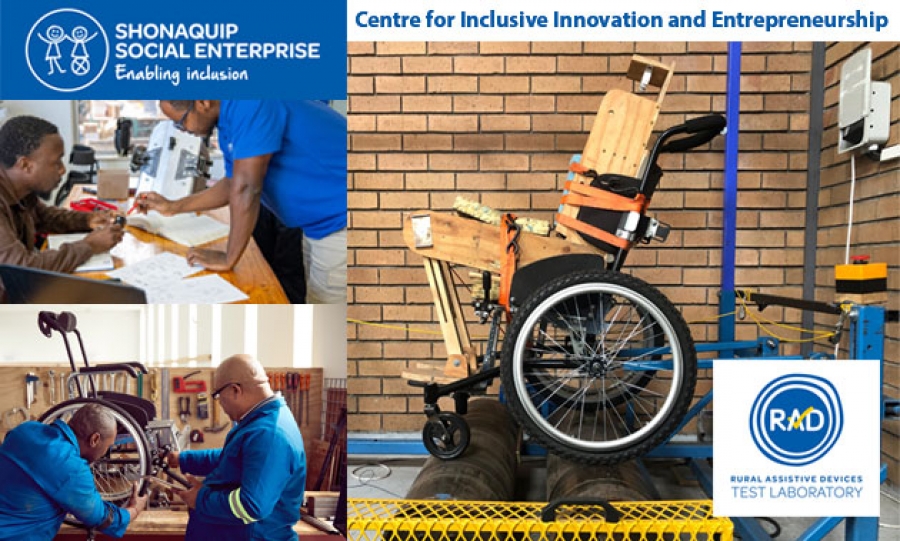
Today, that work continues evolving through The Centre for Inclusive Innovation and Entrepreneurship (CIIE), a space designed to help transform ideas into practical solutions that improve everyday life for people with disabilities.
Across Africa, many families, educators, therapists, and individuals with disabilities develop highly practical solutions through lived experience. They understand barriers intimately because they navigate them every day. Yet access to technical support, testing facilities, manufacturing pathways and product development opportunities remains limited.
As a result, many valuable ideas remain informal adaptations or unfinished prototypes, even when they have the potential to improve inclusion for countless others.
The CIIE was created to help close that gap.
The centre supports innovators working in assistive technology and MedTech by helping develop ideas into products that are practical, durable, and relevant to the environments in which they will actually be used. This includes support in areas such as design development, prototyping, testing, manufacturability and navigating regulatory pathways.
This is especially important in African contexts, where assistive devices are often imported and designed for healthcare systems and infrastructure very different from local realities.
A wheelchair that works well on smooth pavements may struggle on uneven terrain. A device that cannot easily be repaired locally may become unusable long before the end of its intended lifespan. Accessibility cannot be separated from context.
That is why locally driven innovation matters.
Children are often at the centre of this process. Parents frequently become innovators out of necessity, adapting equipment, creating support tools or finding new ways to help their children participate more comfortably and confidently in everyday life. Therapists and teachers continuously develop practical strategies that respond to the realities families face. And many young people with disabilities are growing up with ideas, perspectives and creativity that can help shape the future of inclusive design itself.
The CIIE exists to help create space for these ideas to be explored, strengthened and taken seriously.
At the heart of this work is a simple but important belief: inclusion is not built through products alone. It is built through ecosystems that allow people to participate fully in society.
Assistive technology plays an important role in this process, but meaningful inclusion also depends on support systems, accessibility, education, community understanding and opportunities for people with disabilities to contribute their own knowledge and leadership.
This is why ShonaquipSE’s work extends beyond manufacturing into training, community support, advocacy, and innovation development. The goal is not simply to provide devices, but to strengthen the broader systems surrounding children and families.
As conversations around accessibility and innovation continue to evolve globally, there is growing recognition that some of the most important solutions emerge from lived experience and from communities that understand these realities firsthand. And sometimes, the next meaningful innovation may already exist as an idea in a classroom, a therapy room, a family home or in the imagination of a young person who simply sees the world differently.
The future of inclusive innovation may begin with a simple observation, a personal experience or a creative idea. The CIIE exists to help transform those beginnings into solutions that create meaningful impact.
Because every child deserves the opportunity not only to access the world around them, but to help shape it too.
To learn more about the Centre for Inclusive Innovation and Entrepreneurship, visit: www.shonaquipse.org.za